




6 min read
Navigating Digital Change: Adoption Strategies for Faculty & Students



Why Adoption Is the Real Measure of Digital Transformation
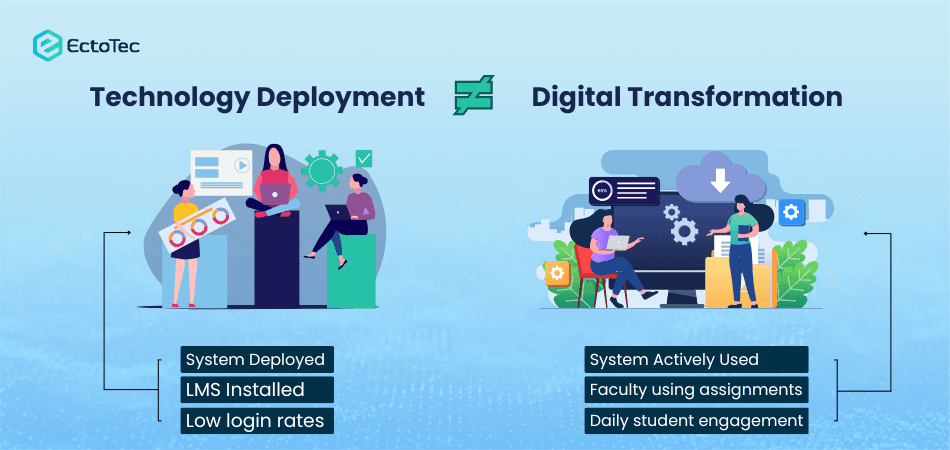
Modern LMS solutions offer flexibility, scalability, and data-driven learning environments. However, real-world facts continually reveal that technology value is realized only when users perceive obvious benefits and are confident in their ability to use the tools at their disposal. According to research on technology acceptability in higher education, the most important determinants of long-term adoption are ease of use, relevance to daily workflows, and institutional support. Faculty adoption has a direct impact on course quality, feedback loops, and instructional creativity. Student adoption influences engagement, retention, and academic performance. When adoption stops, institutions suffer disjointed learning experiences, inconsistent course delivery, and missed opportunities to enhance results.
This is why adoption must be integrated into larger higher education digital transformation efforts, rather than handled as an afterthought.
Adoption Frameworks That Put People First
Successful adoption begins with a structured framework that recognizes various user needs while being consistent with institutional aims. Rather than imposing one-size-fits-all solutions, effective frameworks begin by assessing readiness throughout the campus community.
A readiness assessment assists institutions in identifying gaps in digital literacy, concerns about workload, and existing teaching or learning practices that may conflict with new systems. This knowledge enables institutions to create targeted assistance strategies rather than generic training sessions, which frequently fail to connect. Leadership alignment is equally vital. When institutional leaders clearly describe why digital change is important—and how it supports instructional excellence and student success—adoption gets credibility. When technology is presented as an enabler rather than a compulsion, faculty and students are much more inclined to participate.
Training and enablement are most effective when they are role-specific and ongoing. Faculty gain from understanding how LMS features improve education, evaluation, and engagement, rather than just how to navigate menus. Students require onboarding that links digital tools to autonomy, collaboration, and academic success. Continuous access to support resources builds confidence long after the initial launch. Finally, adoption frameworks must maintain flexibility. Continuous feedback loops enable institutions to improve training, alleviate bottlenecks, and adjust to changing needs. Digital transformation is an evolving process, and adoption tactics should reflect that.
Measuring What Matters: KPIs for LMS Adoption
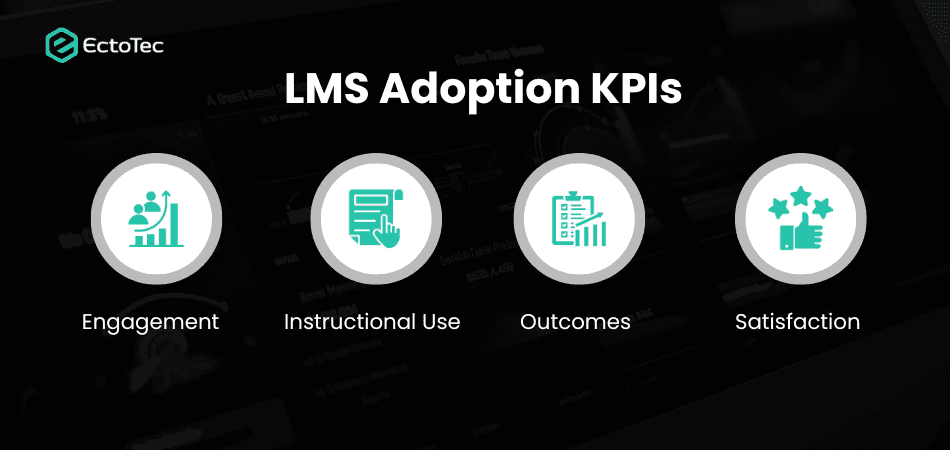
Adoption without measurement is guessing. Institutions that thrive in digital transformation use data to learn how platforms are actually used and where adjustments are required. Engagement metrics serve as early markers of adoption health. Regular logins, time spent in the LMS, and interaction with course materials demonstrate whether users are incorporating the platform into their everyday academic lives or only signing in when necessary.
Metrics for instructional integration reveal a deeper tale. The extent to which instructors use LMS elements such as assignments, conversations, quizzes, and statistics indicates how well the platform is integrated into instructional practice. Courses that frequently use these technologies tend to have more student engagement and clearer learning pathways. Outcome-based KPIs link adoption to institutional goals. Correlating LMS engagement with retention, course completion, and feedback response times enables universities to demonstrate quantifiable benefit. Satisfaction surveys supplement this picture by collecting user sentiment, which frequently reveals difficulties that are not obvious through analytics alone. These indicators, when combined, transform adoption from an abstract idea to a measurable performance indicator.
Incentives That Encourage Meaningful Engagement
While training and assistance are vital, incentives can speed up adoption by rewarding positive behaviors. When constructed properly, incentives promote exploration and consistency over conformity.
Faculty award schemes that recognize innovative course design or effective use of digital resources have the potential to change campus culture. Linking LMS proficiency to professional development routes reinforces adoption as a career benefit rather than an administrative burden. Students are very responsive to transparency and feedback. Dashboards that show progress, participation, and achievement promote self-directed learning. When badges or milestone acknowledgments are linked to academic goals, they can boost motivation.
The most effective incentives are those that align naturally with teaching and learning outcomes, reinforcing the value of the LMS rather than distracting from it.
Adoption as a Pillar of Student Experience Modernization
Today’s students expect digital experiences that mirror the personalization, accessibility, and responsiveness they encounter in everyday life. LMS adoption plays a critical role in meeting these expectations and advancing student experience modernization. When adopted fully, digital learning platforms support mobile access, inclusive design, and personalized learning pathways. Analytics enable early identification of at-risk students, allowing institutions to intervene proactively. Collaboration tools foster peer engagement and build skills that extend beyond the classroom. Modernizing the student experience is not simply about offering more technology—it is about creating coherent, supportive digital journeys that empower learners from enrollment to graduation.
Overcoming Resistance to Change
Resistance to adoption is rarely about technology itself. More often, it reflects concerns about time, confidence, or perceived relevance. Faculty may worry about increased workload or loss of instructional autonomy. Students may struggle with inconsistent course design or unclear expectations. Addressing these concerns requires empathy and transparency. Clear communication, visible support structures, and real examples of success help build trust. Institutions that listen actively and respond thoughtfully are far more likely to see sustained adoption.
Ectotec’s Role in Enabling Adoption at Scale
Ectotec believes that digital transformation is successful when technology, people, and processes work together. Beyond system deployment, Ectotec offers enablement, integration, and managed services to assist institutions navigate change with confidence. Ectotec helps staff and students navigate the digital journey by connecting adoption techniques with institutional goals. Ectotec assists institutions in realizing digital potential by upgrading LMS environments, integrating SIS platforms, and optimizing cloud-based ecosystems.
Conclusion: From Technology to Transformation
Adoption is the link between technological investment and educational impact. Institutions that prioritize adoption frameworks, meaningful measurements, and human-centered assistance are better positioned to succeed in a rapidly changing environment. As higher education evolves digitally, institutions that regard adoption as a continuous strategy—one that empowers teachers, engages students, and modernizes the academic experience—will be more successful. Adoption is not the end of the digital transformation path in higher education. It's the foundation.