




7 min read
From Alerts to Interventions: AI-Powered Student Outreach Workflows in Higher Education


Why Alerts Alone No Longer Work
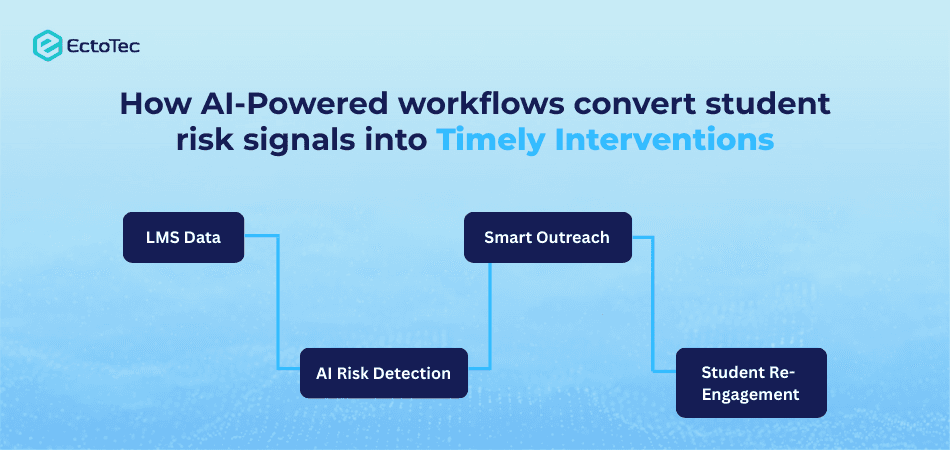
Higher education institutions are under unprecedented pressure to increase retention and completion rates while working with limited staff and resources. Learning management systems such as Canvas create massive volumes of student engagement data—logins, submissions, discussion activity, and assessment trends; but data alone cannot prevent student dropout. What truly determines impact is how quickly and intelligently institutions react to early warning signs. Traditional early-alert systems frequently end with identification, allowing advisers and instructors to manually evaluate dashboards and determine when to intervene. In big or hybrid programs, this delay might be expensive.
Here's where AI-powered student outreach workflows transform student achievement. Institutions can shift from reactive monitoring to proactive dropout prevention by converting alarms into automated, personalized interventions, lowering staff manual workload dramatically.
The Evolution of Early-Alert Systems
Early-alert systems have long been utilized to identify students who are at risk owing to missed assignments, deteriorating grades, or decreased LMS participation. While beneficial, these systems have traditionally relied on static thresholds and required manual follow-up, often days or weeks after risk alerts surfaced. Modern AI-powered early warning systems go further. They use predictive analytics and machine learning to assess historical and real-time behavior patterns in order to determine disengagement risk before academic failure occurs. According to studies in higher education analytics, predictive models can detect at-risk learners with an accuracy rate of more than 85%, providing institutions with a key window for intervention.
However, prediction alone does not increase results. Action accomplishes. AI-powered outreach routines bridge the gap between detection and reaction.
From Prediction to Intervention: How AI Outreach Works
AI-powered student outreach workflows integrate predictive risk identification and automated contact paths. When engagement patterns indicate risk, AI identifies not only who requires assistance, but also when and how outreach should be conducted. Instead of sending a generic alert to an advisor's mailbox, the technology prompts a contextual response. This may include an automated check-in message, a chatbot interaction, or a personalized nudge sent via Canvas, email, or mobile notification. The timing of these interventions is crucial. Research repeatedly reveals that early, low-pressure outreach boosts the likelihood of re-engagement more than delayed academic warnings.
By integrating these workflows directly into the LMS ecosystem, schools ensure that students receive support inside their current learning environment, without adding friction or complexity.
AI Chatbots as the First Line of Student Support
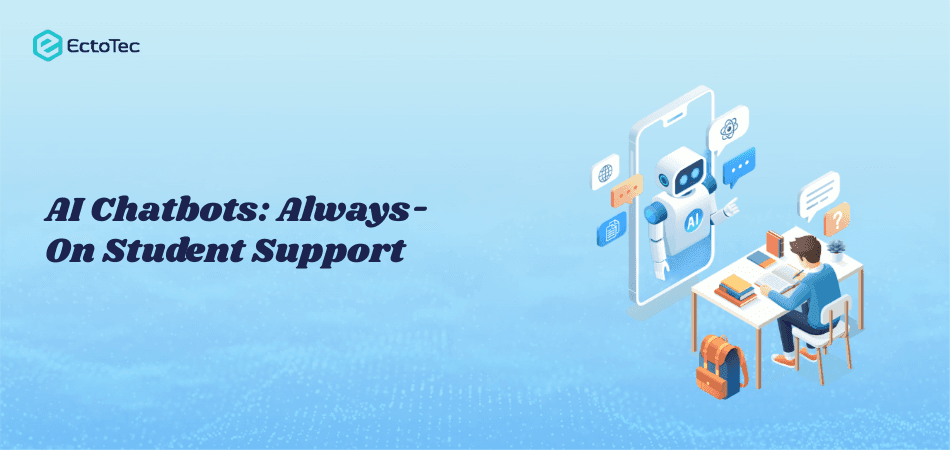
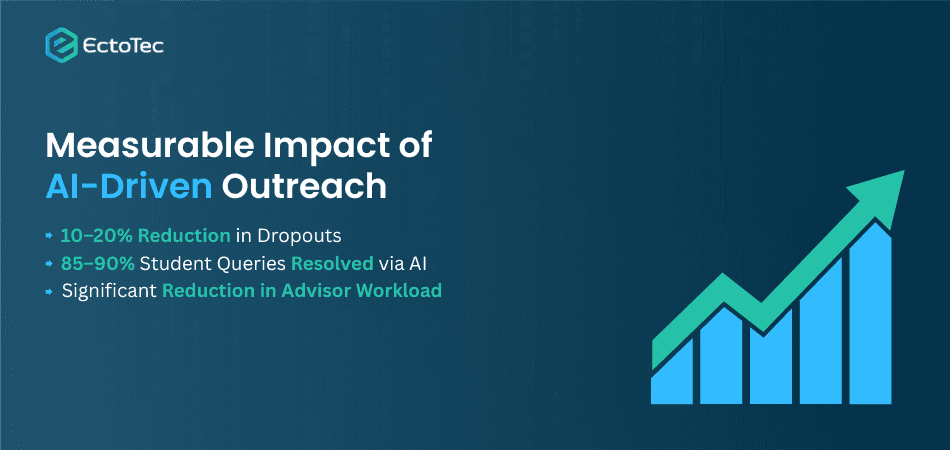
Intelligent chatbots are one of the most effective pieces of AI-powered outreach. These systems are no longer confined to resolving fundamental questions. Today's AI chatbots track interaction statistics, proactively initiate conversations, and direct students to relevant academic or support resources. According to institutions that use chatbots in Canvas, more than 85-90% of regular student inquiries are answered without the need for human contact. This includes concerns about assignments, deadlines, course navigation, and institutional policies. More crucially, chatbots can identify disengagement symptoms and begin helpful discussions when risk arises.
This provides students with a sense of immediate connection and attentiveness. It significantly reduces advisor workload for institutions while providing ongoing student support. In the larger context of AI in higher education, chatbots represent a scalable solution to provide individualized engagement without sacrificing quality.
Automated Nudges That Drive Behavioral Change
Along with chatbots, automated nudges play an important part in student outreach operations. Specific engagement behaviors, such as missed practice quizzes, falling LMS activity, or late submissions, prompt the delivery of these brief, customized messages. Unlike mass emails, AI-powered nudges are tailored to the course setting, student history, and previous responsiveness. For example, a struggling student in the first few weeks of a course may be encouraged and given resource recommendations, whereas a previously high-performing student who suddenly disengages may be given a check-in focused on support rather than remediation.
According to behavioral science research, timely nudges can dramatically increase task completion and perseverance. When offered consistently and carefully, they assist students in regaining momentum before disengagement leads to withdrawal.
Reducing Manual Burden While Improving Retention
One of the most striking benefits of AI-powered outreach procedures is their operational effectiveness. Advisors and teachers are frequently swamped by caseloads, making individualized follow-up impossible. AI automation alters this dynamic.
Routine outreach; reminders, check-ins, and resource recommendations; is handled automatically, freeing up human resources to focus on complicated, high-touch treatments that need empathy and judgment. Institutions that utilize AI outreach report measurable reductions in administrative workload and inbox traffic, as well as increases in advisor satisfaction. From a retention standpoint, the findings are as striking. Institutions that use AI-driven early intervention tactics frequently report dropout rates of 10% to 20%, notably in first-year and gateway courses. These results show that dropout prevention works best when outreach is prompt, tailored, and constant.
Implementation Considerations for Sustainable Success
Deploying AI-powered outreach workflows involves more than just technology. Data quality is essential. LMS, SIS, and analytics platforms must all work together to provide accurate and complete information. Fragmented data settings reduce the efficacy of prediction models and outreach automation. Ethical governance is equally vital. Institutions must assure openness, safeguard student privacy, and actively detect algorithmic bias. Responsible AI practices foster confidence among students and staff while guaranteeing regulatory compliance.
Finally, AI should be positioned as an augmentation, not a substitute, for human support. Training advisers and academics to interpret AI-generated findings ensures that automated outreach results in meaningful, compassionate interventions rather than impersonal ones.
How ectotec Enables AI-Driven Student Outreach
Ectotec provides AI-powered student outreach procedures as part of a full LMS and managed services strategy. Ectotec assists schools in transitioning from disparate resources to unified student success environments by integrating Canvas analytics, early-alert systems, AI automation, and human advising processes. This integrated strategy ensures that alerts do not terminate at the dashboard. Instead, they initiate timely, actionable interventions that span many programs while maintaining a human-centered experience.
Conclusion: Turning Alerts Into Action
Early-alert systems are only as successful as the interventions they facilitate. AI-powered student outreach operations turn predictive knowledge into real-time action, allowing institutions to assist students before disengagement leads to dropout. Higher education executives may minimize human workload, boost retention rates, and create dynamic learning environments by combining predictive analytics, intelligent chatbots, and automated nudges.
In the changing landscape of AI in higher education, the transition from warnings to interventions is not optional; it is required for long-term student success.