



6 min read
LMS–SIS Integrations With AI: How to
Prepare Your Academic Ecosystem for
2026



● Data Accuracy: API-based, event-driven integrations reduce batch file imports while preventing duplicate records and mismatched enrollments. This directly enhances reporting, financial aid procedures, and compliance.
● Operational Efficiency: Automation minimizes registrar workload, speeds up student/faculty onboarding, and reduces the risk of late grade posting and human reconciliation.
● AI-enabled Capabilities: Once data is reliably flowing between the LMS and the SIS, AI can power adaptive learning, enrollment anomaly detection, intelligent student communications, and advising load balancing. According to recent assessments, the use of AI for personalization and administrative automation is rapidly increasing.
Common pain points (what institutions actually face)
● Inconsistent enrollment data, including variable refresh rates, manual CSV drops, and incorrect course IDs.
● Duplicate or orphaned records refer to students who have several IDs or are no longer enrolled.
● Poor synchronization – batch imports (e.g., three times per day) create a gap between the official SIS status and what faculty/students view in Canvas.
● Grade posting delays occur when faculty-grade entry does not instantly reconcile with the degree audit and transcript workflow.
● Fragmented workflows—advising, financial aid, and IT all require the same canonical student state but frequently use separate snapshots.
Quick wins you can implement now (fast ROI)
Universities can begin by switching from planned batch imports to API-based event-driven synchronization to get quick ROI on LMS–SIS integration. Replacingmanual CSV drops with Banner/Ethos APIs or Canvas APIs ensures that enrollment events, such as add, drop, or withdrawal, are pushed promptly. Tools like Ethos Integration Hub or Banner BPAPI facilitate this process. By running jobs that flag possible duplicate IDs—matching on name, date of birth, and email—and forwarding them to registrar staff with recommended merges, duplicate identification and reconciliation can be automated.
For fuzzy matches, lightweight machine learning or anomaly detection may be used. A single student ID, such as the Banner ID, should serve as the source of truth, ensuring that all downstream systems relate to the same identity and preventing orphaned data. Standardizing canonical identities is also essential. Real-time grade posting can be implemented by enabling Canvas Gradebook webhooks to automatically update SIS grading procedures or a staging table for verification before final transcript publishing. Every time enrollment changes, automated communications can be set up to notify students via email or SMS of revisions to their course registration, waitlist modifications, or drops for nonpayment.
These alerts can include links to pertinent next actions, such as tuition portals or advising appointments. Finally, traffic between Canvas and Banner/Ethos can be safely tested and mediated before full production deployment by establishing a small-scope API gateway and sandbox environment.
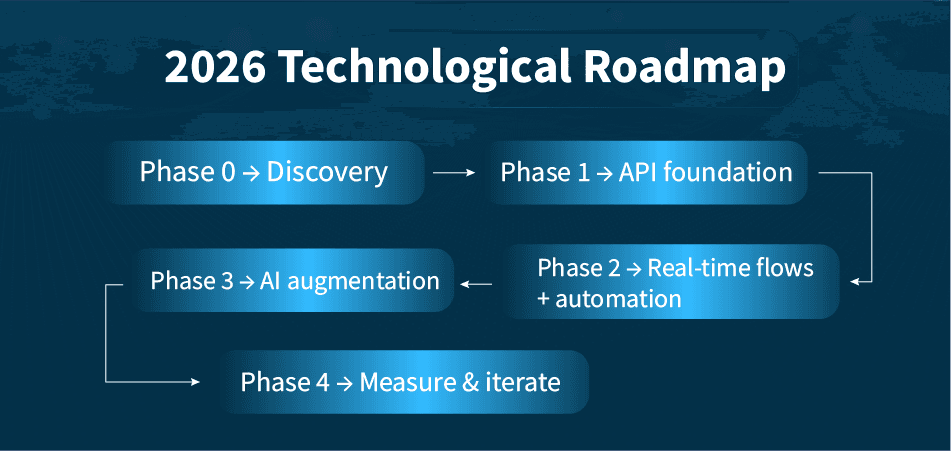
2026 technological roadmap (practical phases):
Phase 0: Discovery (0–2 months): catalog integrations, refresh cadences, and pain spots. Map FERPA compliance criteria and canonical IDs.
Phase 1: API foundation (2–6 months): establish a secure API gateway and token management; enable Canvas and Ethos/Banner APIs.
Phase 2: Real-time flows + automation (6–12 months): Install webhooks/event streaming, real-time enrollment and grading flows, and automated communications.
Phase 3: AI augmentation (12–18 months): Implement AI modules on top of clean data anomaly detection for enrollment integrity, smart advising nudges, and tailored learning recommendations.
Phase 4: Measure & iterate (ongoing): analyze KPIs, undertake remediation sprints, and expand AI use cases.
Streamlined LMS–SIS Integration Pattern:
At the University of Hawaii, Banner/Ellucian Ethos provides real-time enrollment events (enrollment.created and enrollment.updated) that flow through an API gateway andmessage broker (Kafka or cloud-managed streams). Multiple consumers are fed by these events: a communications microservice initiates templated emails/SMS for enrollment changes, a data quality service conducts deduplication and anomaly detection to notify registrars, and Canvas receives updates via SIS Import or Enrollment APIs for fast roster sync. On top of this, an AI layer ingests the cleaned canonical data to generate predictive insights, such as withdrawal risk or advised actions, surfaced in advisor dashboards
Measuring Success and Mitigating Risks
Key success metrics include roster update delay (<5 minutes), decrease in duplicate student records, faster grade posting (target: 50% reduction), registrar hours saved, and better student satisfaction (NPS). All APIs should employ mutual TLS and scoped tokens, keep audit logs, and incorporate rate-limiting and fraud detection to guarantee compliance and security. Change management is crucial—professors and registrarsnshould be taught real-time operations, and a read-only lagged snapshot should be available during the transition.
Analytics & Trends: Higher Education Technology in 2025–2026
Ellucian's Ethos Integration Hub is becoming the default API layer for Banner users as universities quickly transition from batch-based SIS updates to API-first integrations. As part of their digital modernization initiatives, organizations like the University of Hawaii are giving real-time data synchronization top priority. AI usage in higher education is accelerating, with personalization, automated feedback, and administrative automation going from pilots to production systems. Industry platforms such as Litslink report rising demand for AI models trained on LMS and SIS data for predictive analytics and student success interventions.
These days, modern EdTech ecosystems are built on cloud-native and event-driven designs. Providers such as MindInventory highlight scalable cloud platforms and real-time pipelines as crucial for quick roster updates and live analytics dashboards. Enrollment pressure and rising student expectations are pushing institutions to integrate their digital systems more tightly. Research from Everspring shows that institutions with integrated platforms see measurable gains in recruitment efficiency, onboarding speed, and retention.
Security and compliance remain non-negotiable priorities. Guidance from blog insycle emphasizes API security, audit logging, and FERPA alignment as critical safeguards in any LMS–SIS integration roadmap.
Conclusion:
LMS-SIS integration is now a key factor in student experience, data quality, and institutional agility rather than a back-office IT improvement. Universities can eliminate data silos, simplify enrollment processes, and provide a solid foundation for AI-driven innovation by implementing an API-first paradigm using platforms like Canvas, Banner, and Ellucian Ethos. Investing in governance, smart automation, and real-time integrations now will put institutions in the greatest position to fulfill growing student expectations and run smoothly in 2026 and beyond. Fixing the data layer, streamlining the processes, and allowing AI to provide the insights that revolutionize the way higher education serves its students is the obvious way ahead